
Quick answer
Belgrade remains one of Europe's most affordable capitals for visitors. Most travelers spend between 4,000 and 8,000 RSD per day (roughly 35 to 70 EUR), covering accommodation, meals, local transport, and activities. Budget-conscious visitors can manage on less, while those seeking upscale dining and private tours may spend considerably more, especially during summer festival season.
The Serbian dinar trades at roughly 117 to the euro as of 2026, and that exchange rate creates immediate buying power for visitors arriving from Western Europe or North America. A three-course meal in a neighborhood kafana costs what a single appetizer might in Paris or Vienna. A monthly tram pass in Belgrade costs less than a day ticket in most EU capitals. This pricing structure extends across the city, from museum entry to cinema tickets to craft beer in Savamala's warehouse bars. Yet the answer to whether is Belgrade expensive to visit depends on how you travel. The city now hosts luxury hotels charging Western prices, and the rooftop bars along Beton Hala command cocktail prices that rival Barcelona. The gap between local pricing and tourist pricing has widened since 2020, particularly in Stari Grad and along the Danube waterfront. A morning burek from a neighborhood pekara costs 150 RSD; the same pastry rebranded as a "Serbian pie" near Knez Mihailova can cost four times that. Accommodation drives the largest variance in Belgrade cost estimates. Hostels in Dorćol start around 1,500 RSD per bed, while mid-range hotels near Republic Square run 6,000 to 10,000 RSD per night. Airbnb apartments in residential blocks like Vračar offer better value than hotels for stays longer than three days. Book ahead for September and October when the city hosts film festivals and conferences; last-minute rates during peak periods can double. The city rewards cash over card in smaller establishments, and many bakeries, produce markets, and family-run restaurants still operate cash-only. ATMs are ubiquitous, but exchange offices near the fortress and train station offer poor rates. Withdraw dinars from bank ATMs in residential areas, or exchange currency at licensed menjačnica away from Knez Mihailova where rates stay within two percent of the interbank mid-market figure. Visiting Belgrade on a budget is entirely feasible without sacrificing experience. Kalemegdan Park and the fortress grounds charge no entry fee, the city's best street art clusters in Savamala and Cetinjska require only a tram ticket to reach, and the produce market at Zeleni Venac operates daily with prices a fraction of supermarket rates. The question is not whether Belgrade is expensive to visit outright, but whether your spending aligns with the city's two-tier economy.
“A morning burek from a neighborhood pekara costs 150 RSD; the same pastry rebranded as a Serbian pie near Knez Mihailova can cost four times that.”
Is Belgrade Expensive to Visit? A Realistic Cost Analysis
Belgrade remains one of the more affordable European capitals, offering a range of price points for travelers. Daily expenses depend largely on accommodation choices and dining preferences.
How to spend less
- Use public transport instead of taxis to reduce transit costs
- Look for daily menus at local restaurants for lunch
- Visit during the week to find lower accommodation rates
A budget-conscious traveler can expect to spend approximately 6,000–8,000 RSD per day, while a more comfortable experience typically ranges from 12,000–18,000 RSD.
Is Belgrade Expensive to Visit When Factoring In Entrance Fees?
Admission costs in Belgrade are generally low, with many historical landmarks offering complimentary access. Visitors often find that major outdoor sites do not require an entry ticket.
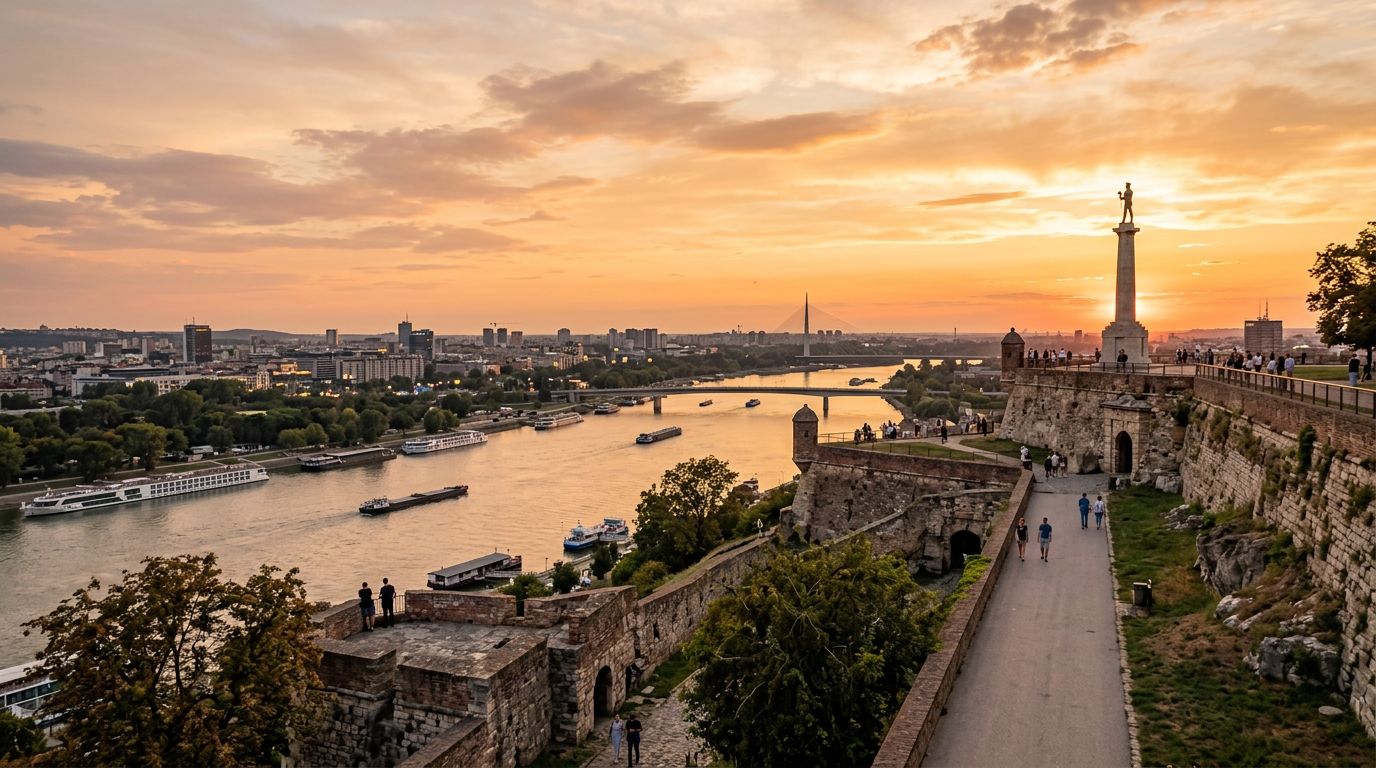
A typical adult pays 0 RSD for fortress entry, as public historical sites in Belgrade remain accessible without charge.
Navigating the City: Is Belgrade Expensive to Visit Regarding Transport?
Kalemegdan Fortress is located at Kalemegdan, Belgrade 11000, Serbia, and is accessible via several public transportation lines connecting the city center to the park grounds.
Lines 24, 26, 79, or EKO 1 to Kalemegdan stop
Lines 2, 5, or 10 to Kalemegdan stop
Available from central locations to Kalemegdan
Timing Your Trip: Is Belgrade Expensive to Visit Depending on the Season?
The shoulder months of April, May, September, and October offer the most favorable balance of moderate temperatures and lower accommodation demand. Visiting during these windows avoids the price hikes associated with the peak summer festival season.
Shoulder Season (Apr-May, Sep-Oct)
Low to moderateMild, 15°C to 25°C
Accommodation rates are generally more stable and crowds are thinner during these periods. It is an ideal time for walking tours before the peak summer heat arrives.
Peak Season (Jun-Aug)
HighWarm to hot, 25°C to 35°C
Prices for lodging increase due to summer events and outdoor cafe culture. Expect higher demand for city services and popular venues.
Winter (Nov-Mar)
LowCold, -2°C to 8°C
Hotel rates reach their lowest points of the year. While the weather is cold, city life remains active with indoor cultural programming.
Weekday mornings (08:00–10:00)
Very low—
This window provides the best morning light for photography and lower crowds before the afternoon peak at sites like Kalemegdan.
Verdict: For the best balance of costs and experience, plan your visit during the shoulder months of April or October, prioritizing early arrival between 08:00–10:00.
Check availability
Frequently Asked Questions About Visiting Belgrade
Everything you need to know about is belgrade expensive to visit